Modernizing Tradition: San-shin in 21st Century Sound Art
"How can a three-stringed instrument, carved from snakeskin and wood, find its place in a world of synthesizers and digital beats?" In Okinawa, the answer lies in a seamless transition from the sacred to the contemporary, where ancient vibrations meet modern production.
* The *San-shin* is more than an instrument; it is the spiritual heartbeat of Okinawan identity. * Modern fusion is an intentional evolution that preserves the "sonic DNA" of the islands rather than just layering sounds. * This musical convergence acts as a living bridge, carrying Ryukyuan heritage into the global ear.

Echoes of the Sacred: Understanding the Roots of San-shin Music
The smell of salt air drifts through an open window in Naha at 2:00 PM as the sharp, percussive pluck of a *San-shin* cuts through the humid afternoon. It is a sound that feels older than the buildings surrounding it, a rhythmic pulse that seems to rise directly from the limestone soil.
To understand the modern sounds of Okinawa, one must first understand the weight of the *San-son*. Derived from the Chinese *sanxian*, the *San-shin* is a small, three-stringed lute covered in snakeskin.
In the era of the Ryukyu Kingdom, music was not merely entertainment; it was a vital thread in the social and spiritual fabric of the islands. It was played during communal gatherings, to honor ancestors, and to connect the people to the divine forces of nature.
The traditional sound is defined by its specific scales and a vocal style that often mimics the natural rises and falls of the Okinawan landscape.
Unlike Western music, which often focuses on harmonic progression, traditional Okinawan music relies heavily on the interplay between the melody and the rhythmic, percussive strike of the plectrum. It is a music of ritual, designed to ground the listener in the present moment and the ancestral past.
Historically, these sounds were tied to specific ceremonies and social hierarchies. In the past, the music served a functional role in communal life, acting as a medium for storytelling and spiritual expression.
Today, that ritualistic function has shifted, but the core emotional resonance remains, providing the foundation for everything that follows. But how does a centuries-old ritual survive the transition to a digital age?

The Crossroads of Sound: Where Tradition Meets Modernity
A late-night jazz club in Ginowan hums with the low chatter of patrons at 11:30 PM before a sudden, bright melody breaks through the ambient noise. The sound is familiar yet jarringly new—a jazz saxophone dancing around the unmistakable, plucked cadence of a *San-shin*.
The fusion of traditional and modern music in Okinawa is a sophisticated technical feat. It is not simply about playing a folk song on an electric guitar; it is about the intentional integration of two different worlds.
When artists blend genres like ambient electronica, jazz, or rock with traditional motifs, they are engaging in a delicate balancing act of textures.
One common technique is the use of the *San-shin* as a rhythmic anchor against sweeping, modern textures. In ambient or electronic tracks, the sharp, percussive attack of the traditional strings provides a grounding element against the wash of synthesizers.
Conversely, in jazz-influenced compositions, the unique scales of Okinawan music are used to create melodic tension that defies standard Western resolution.
This is not merely an act of homage; it is an act of reinvention. By layering traditional melodies over modern tempos or using digital looping to expand a single folk motif, artists create a "hybrid" sound.
This combination achieves a unique sonic identity that is instantly recognizable as Okinawan, even when the instrumentation is entirely contemporary. It prevents the music from becoming a museum piece, keeping it vital and evolving.
However, the transition from the stage to the studio brings its own set of complexities.
The Modern Canvas: Contemporary Artists and Their Sound Palette
Walking through a small record shop in Koza at 4:00 PM, you notice a sleeve featuring a traditional folk singer, but the genre listed is "Experimental Electronic." The juxtaposition of the old image and the new label tells the story of the current musical landscape.
Contemporary Okinawan artists are utilizing a wide array of technology to translate their heritage. Digital manipulation, granular synthesis, and sophisticated studio production allow musicians to take the organic sounds of the *San-shin* and stretch them into vast, cinematic soundscapes.
Some artists use looping pedals to build complex, polyphonic layers that mimic traditional ensemble playing but with a modern, driving energy.
The reception of this music varies by audience. Local listeners often view these hybrid works as a way to keep their culture relevant to younger generations, while international audiences find the "exotic" yet structured sounds deeply engaging.
When I first sat in a studio in Naha in 2025, listening to a producer layer a single *San-shin* pluck into a 120-BPM techno beat, I realized that the tradition wasn't being lost—it was being amplified.
| Feature | Traditional San-shin Music | Modern Okinawan Fusion |
|---|---|---|
| Primary Purpose | Ritual, communal storytelling, spiritual connection | Artistic expression, global engagement, genre exploration |
| Core Instrumentation | San-shin, sanshin-related percussion, folk vocals | Synthesizers, electric guitars, drum kits, digital loops |
| Rhythmic Structure | Often tied to folk dance and ritual pacing | Variable; can include jazz, rock, or electronic beats |
| Setting | Community festivals, ancestral rites, home gatherings | Concert halls, clubs, digital streaming platforms |
The challenge remains significant: how much can you change a traditional melody before it loses its soul? Artists must navigate the fine line between cultural translation and pure imitation. But why does this evolution matter so much for the people living there?
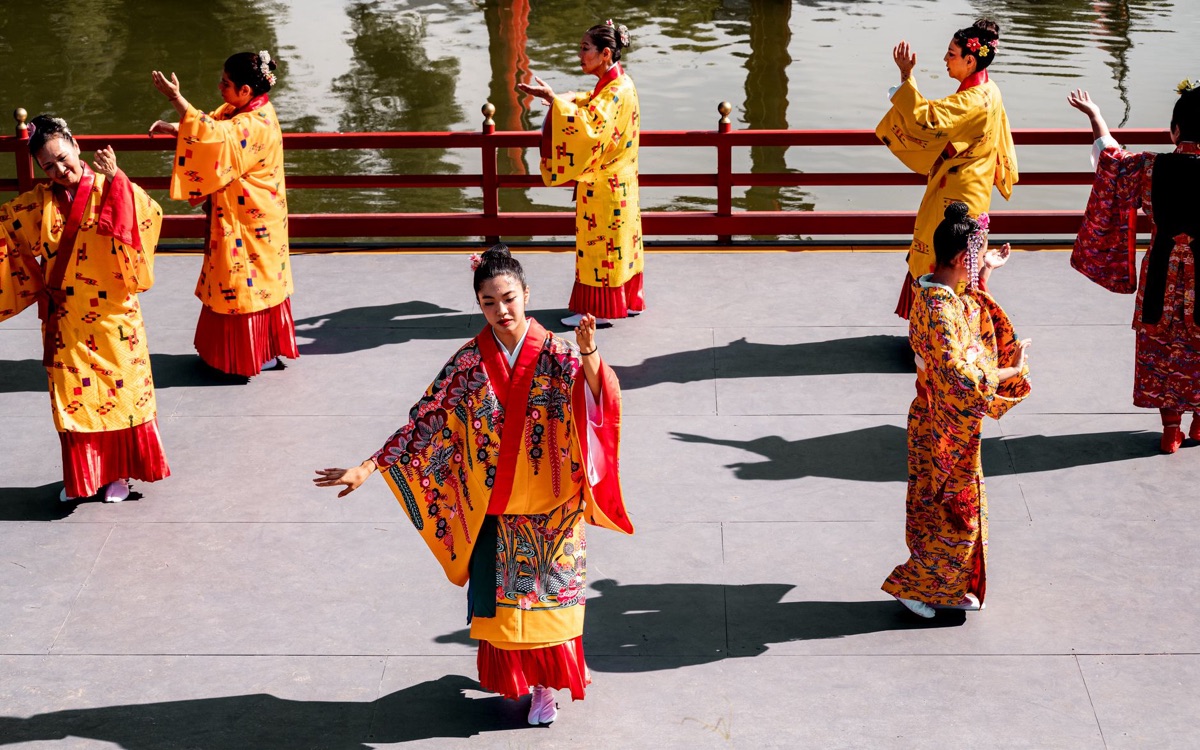
Cultural Significance: Beyond Sound Waves
A group of elders sits on a porch in a rural village at sunrise, nodding rhythmly to a radio playing a modern pop song that features a subtle, traditional flute melody. The transition of the music is so natural that the gap between generations seems to vanish for a moment.
This musical evolution is a testament to the resilience of Okinawan culture. Throughout history, the islands have faced significant external pressures, from the shifts in political sovereignty to the heavy presence of foreign military forces. In this context, music serves as a vessel for identity.
By evolving, the music ensures that the core values of the Ryukyuan spirit are not lost to time but are instead carried forward into the future.
The ability to integrate modern sounds is a form of cultural preservation. In a globalized world where Western pop dominates the airwaves, the risk of traditional music becoming an obsolete curiosity is high.
By making the *San-shin* part of a modern sonic palette, artists ensure that the sounds of their ancestors remain part of the living, breathing conversation of the present. It is a living document of a people who have always been masters of adaptation.
But as we look toward the next decade, we must ask: what does the road ahead look like?
The Future Soundscape: Where Do We Go From Here?
As the sun sets over the East China Sea at 6:45 PM, the orange light hits the waves, much like the golden hue of a well-worn *San-shin*. The horizon is vast, much like the possibilities for the music that will emerge from these islands in the decades to come.
As global connectivity shifts economic landscapes, it is noted that according to World Bank data, Japan recorded GDP per capita of US$35,951 in 2025.
The future of Okinawan music likely lies in even deeper experimentation. We may see more seamless integrations where the distinction between "traditional" and "modern" disappears entirely, resulting in entirely new genres that are born from this specific intersection.
As digital tools become more accessible, the ability to manipulate and reimagine traditional sounds will only grow.
To navigate this changing landscape, musicians often follow a specific creative workflow:
- Source Selection: Identifying a core traditional melody or rhythmic pattern from the *San-shin* or folk archives.
- Digital Translation: Using MIDI or granular synthesis to translate organic textures into digital formats.
- Layering: Adding modern elements like drum machines, bass synths, or electric guitars.
- Refinement: Balancing the traditional "soul" of the melody against the modern production density.
- Global Distribution: Releasing the hybrid sound through streaming platforms to reach a global audience.
The responsibility of the modern artist is to act as a steward. They carry the weight of a long history in every note, but they also have the freedom to explore new territories.
As Okinawan music continues to travel globally through streaming and international festivals, it will serve as a powerful ambassador, proving that tradition is not a static thing to be guarded, but a dynamic force that can drive the sounds of tomorrow.
#






Comments 0