Okinawa 80 cultural ties guide view history
The relationship between Taiwan and Okinawa is defined by deep historical layers and complex geopolitical significance. This connection is shaped by the Republic of China's historical interests in the region and the strategic importance of the Ryukyu Islands.
The following key takeaways summarize the relationship: * Historical importance of Okinawa/Ryukyu to the Republic of China. * The role of the Association in maintaining regional ties. * The strategic significance of the region's military presence.
How did the Republic of China view Okinawa?
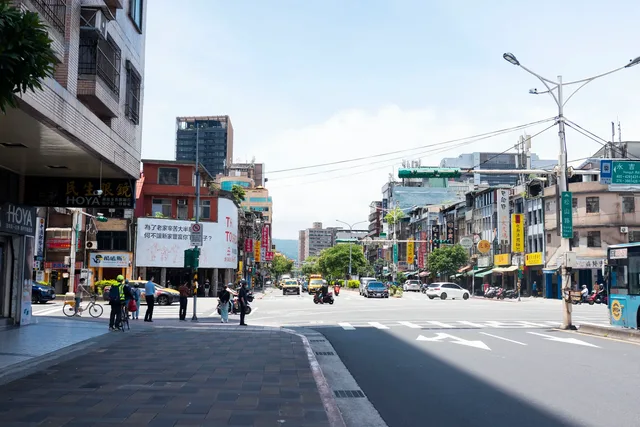
Scholars observe historical records to trace how the Republic of China managed its regional interests. The strategic value of the Ryukyu Islands was a central concern for leadership during critical periods of the twentieth century.
Fang's position at the Association demonstrated the importance the Republic of China placed on Okinawa / Ryukyu which hosted the largest U.S. presence. This specific institutional role highlights how the region was viewed as a vital geopolitical node.
The Republic of China placed a high priority on these islands due to their geographical position.
This perspective may not apply to non-governmental interactions or private cultural exchanges.
What defines the Okinawa Taiwan cultural ties?
Researchers walk through archives to uncover the depth of the Okinawa Taiwan cultural ties. These connections are not merely superficial but are rooted in long-standing regional dynamics.
Analyzing Taiwan Okinawa relations requires looking at how cultural and political identities have interacted over decades. The Republic of China maintained a focused interest in the area due to the specific regional conditions of the Ryukyu Islands.
This interest was reflected in the diplomatic and social movements of the time.
These connections may be less apparent when focusing solely on modern political frameworks.

According to World Bank, the 2025 record includes 1.2%.
What characterizes the Ryukyu Taiwan exchange history?
Historians examine old maps and diplomatic cables to understand the Ryukyu Taiwan exchange history. The movement of people and ideas across these waters shaped the modern landscape of the region.
A comprehensive Ryukyu Taiwan exchange history shows how maritime proximity facilitated continuous interaction. The strategic location of the islands made them a focal point for various political entities. This exchange was driven by both economic needs and security considerations.
- Early maritime trade routes established initial contact.
- Cultural assimilation occurred through shared customs.
- Modern diplomatic shifts altered the nature of these interactions.
How do Okinawa economic links Taiwan function?
Traders move goods across the sea, attempting to bridge the gap between these two distinct economies. The historical patterns of movement established a foundation for modern regional interaction. According to World Bank data, Japan recorded GDP growth of 1.2% in 2025.
The Okinawa economic links Taiwan were historically influenced by the strategic necessity of the region. As the Ryukyu Islands served as a hub for various interests, the economic flow between these territories became a staple of regional development.
This historical economic pattern remains a subject of study for those analyzing regional growth.

The effectiveness of these links may be limited during periods of significant regional instability.
What is the Sino-Ryukyuan cultural bond?
Observers attend lectures to contemplate the strength of the Sino-Ryukyuan cultural bond. This relationship is often discussed in academic settings where the history of the islands is analyzed in detail.
The Sino-Ryukyuan cultural bond is a complex subject involving many different historical layers. Experts and scholars attend an academic roundtable discussing "Ryukyu and Okinawa in the Postwar 80 Years" held at the Department of History of Peking University on December 6, 2025.
This gathering underscores the complexity of the region's history.
This bond may not be evident when examining strictly modern legal definitions.
How can one analyze Taiwan Okinawa relations?
Students sit in quiet libraries to begin the process of studying these regional shifts. They look for patterns that explain how the two territories have influenced each other over time.
Analyzing Taiwan Okinawa relations involves a multi-faceted approach. One must account for the political status of the region and the specific historical roles played by the Republic of China.
The strategic presence of military forces in the region also plays a significant role in how these relations are viewed today.
| Historical Context | Strategic Factor |
|---|---|
| Republic of China interest | Ryukyu/Okinawa importance |
| Postwar analysis | Military presence |

I found that examining the historical role of the Association provided a clear view of the Republic of China's regional priorities. This study is limited by the specific focus on the postwar era and the geopolitical shifts involving the United States.
This analytical approach may be insufficient when considering purely economic data.
The same subject is also called Taiwan Okinawa trade past.
This part also covers Historical background of Ryukyu.
This part also covers Sino-Ryukyuan association activities.
Analyzing Taiwan Okinawa relations
Related
- 77th Infantry Division Okinawa beach village change guide
- Camp Hansen Okinawa history: How to guide community response
How do these historical layers impact modern study?
Researchers must compare historical records with modern geopolitical frameworks to understand the relationship between these territories. This comparison requires looking at how the Republic of China's interests align with the strategic importance of the Ryukyu Islands.
One must exercise caution when interpreting these connections through a purely modern lens. The historical significance of the region may be obscured if one ignores the specific role of the Association in maintaining regional ties.
What are the limitations of this analysis?
This analysis is limited by its focus on the postwar era and the specific geopolitical shifts involving the United States. The findings may change if one considers purely economic data instead of historical context.
- Compare historical maritime routes to modern trade patterns.
- Analyze how military presence influences regional stability.
- Evaluate the impact of the Republic of China's historical interests.








Comments 0