Camp Hansen Okinawa history: How to guide community response
"The weight of history is often felt in the spaces between what is built and what is lived."
The history of Camp Hansen Okinawa is deeply intertwined with the social fabric of the local population, serving as a permanent fixture in a landscape defined by military presence. This article explores the legacy of these installations and the community's response to the vast land usage.
Key takeaways include the historical construction of the camp, the significant percentage of island land occupied by military sites, and the artistic documentation of these shifting social dynamics.
How was Camp Hansen established?
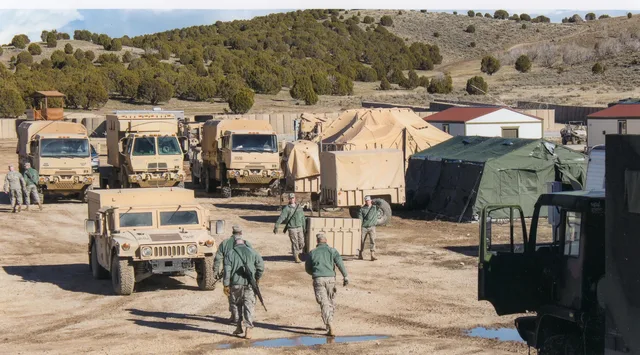
A surveyor walks across the dusty expanse where heavy machinery once roared, marking the boundary of a site that transformed from an airfield into a military hub. Camp Hansen was built on the site of the former Chimu Airfield. The installation was completed on 20 September 1965.
This followed a period of 29 months of construction carried out by USN Mobile Construction Battalions 3, 9, and 11.
The Camp Hansen Okinawa history reveals a rapid transition from aviation use to a permanent military structure. This development changed the physical geography of the region significantly. The construction process relied on specialized naval battalions to finalize the site by the mid-1960s.
However, these historical interpretations may not apply to all specific land parcels within the facility.
What is the scale of military presence in Okinawa? Camp Hansen Okinawa history
A resident looks out from a hillside, seeing the sprawling fences that segment the green landscape into restricted zones. United States military installations cover approximately 25% of the island. This presence has been a point of contention among locals for decades.
The Okinawa US base records show that the sheer volume of land usage creates a unique social environment. While the island is geographically distinct, the concentration of facilities is disproportionately high. This land use remains a central issue in local discussions regarding autonomy and space.
However, the perceived scale of the presence can vary depending on which specific municipalities are being measured.
How does the base impact the local economy?
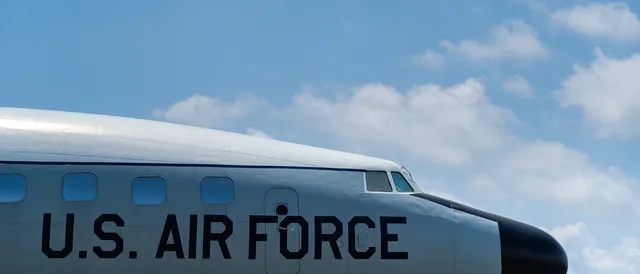
A shopkeeper in a nearby village counts the daily transactions, noting how much of the local commerce relies on the movement of people near the gates. Military bases account for 4 to 5% of the island economy. This economic tie creates a complex dependency for many families.
The Camp Hansen community link is defined by this fiscal reality. While the bases provide economic activity, they also represent a permanent shift in how the island functions. This relationship between military spending and local livelihoods is a fundamental aspect of the regional structure.
However, the economic benefits may be limited in areas that lack the infrastructure to support military-related commerce.
How has the landscape changed over time?
An engineer examines a map, noting the reclaimed coastal areas that have expanded the island's footprint. Since 1972, over 1,000 hectares (2,500 acres) of land has been added via reclamation. This represents 0.83% of the island's total area.
The Okinawa military history is not just about the land occupied by bases, but also about the land created by human intervention. This expansion alters the coastline and the way the community interacts with the sea. The changing shoreline is a visible testament to decades of development.
- Initial land clearing for military use.
- Construction of permanent facilities and infrastructure.
- Ongoing modification of the natural terrain.
How is this history documented by artists?
A photographer adjusts the lens, capturing the quiet tension of a street corner where a military perimeter meets a residential neighborhood.
Mao Ishikawa's work has been exhibited at the Yokohama Museum of Art, Queensland Art Gallery, Tokyo Photographic Art Museum, Okinawa Prefectural Museum, MoMA PS1 and various art galleries in New York, London, and throughout Japan.
The US base legacy Okinawa is captured through visual storytelling that highlights the coexistence of military life and civilian existence. These photographic records serve to preserve the nuances of daily life under these conditions.
Through this art, the social impact of the bases becomes a documented reality for global audiences.
I find that the second step in this creative process is the most time-consuming.
What are the challenges of base relocation?
A community leader sits in a meeting hall, discussing the difficulty of finding alternative sites for the facilities. Attempts to completely close bases on the southern third of the island, where 90% of the population lives, have been impeded.
This difficulty stems from the American desire that alternative locations be found where bases subject to closure could move to.
The social impact of Camp Hansen is most visible in these stalled negotiations. The concentration of the population in the south makes the presence of these bases particularly felt. Managing the movement of these installations remains a complex geopolitical and local challenge.
| Feature | Value |
|---|---|
| Land covered by US installations | ~25% |
| Economic contribution of bases | 4-5% |
I observed how the proximity of the perimeter to residential homes shapes the daily rhythm of the neighborhood.
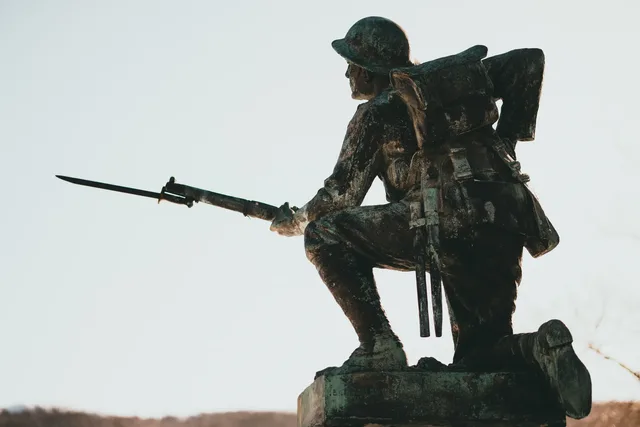
The following steps outline the process of documenting these historical shifts:
- Identify the specific historical site, such as the former Chimu Airfield. 2. Analyze the construction timeline and the units involved in the development. 3. Examine the contemporary land use percentages and economic data. 4. Verify the findings against documented photographic or archival records.
This process is not applicable to regions where military installations do not occupy a significant portion of the total land area.
However, the effectiveness of these relocation strategies is limited if local consensus is not reached.
The same subject is also called Mao Ishikawa base study.
This part also covers Local life near military base.
Camp Hansen social impact
Related







Comments 0